
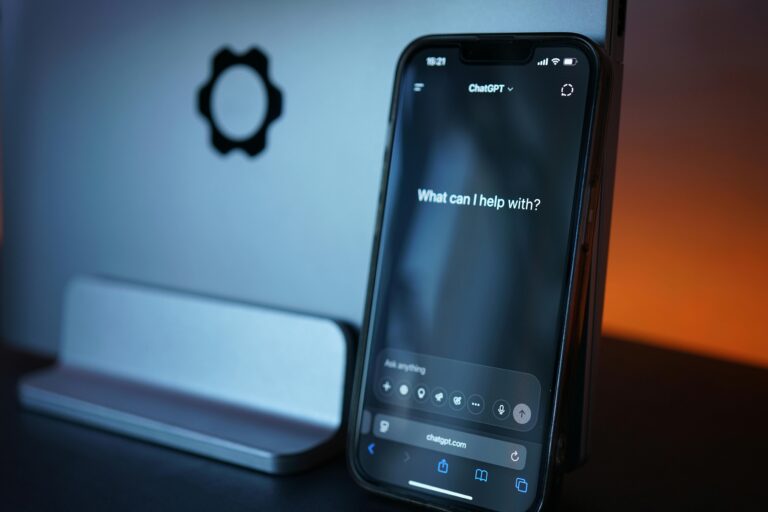
Mobile virtual assistant comparison 2026: AI assistants and business support
Mobile virtual assistants have evolved rapidly. In 2026, consumers can use AI assistants to answer questions, search the web, interact with apps, control devices and complete increasingly complex tasks.
Google Gemini, Apple's Siri AI, Amazon Alexa+ and Samsung Bixby are examples of how conversational AI is becoming part of everyday mobile and connected-device experiences.
For businesses, however, choosing an AI assistant is a different question. A consumer assistant may be excellent for individual productivity, while a company may need something very different: customer support, CRM workflows, multilingual communication, lead follow-up, administration or human operational support.
This mobile virtual assistant comparison looks at the major consumer assistants available in 2026 and explains what businesses should consider when deciding between an off-the-shelf AI assistant, custom AI workflows and human virtual assistant support.
What is a mobile virtual assistant?
A mobile virtual assistant is an AI-powered assistant that users can access through a smartphone, tablet or connected device. Depending on the platform, users can interact with it through text, voice, images or other interfaces.
Modern mobile AI assistants can combine technologies such as:
- natural language processing
- generative AI
- voice recognition
- multimodal understanding
- context awareness
- web search
- application and system actions
- third-party integrations
The capabilities vary significantly between platforms and devices. Businesses should therefore evaluate an assistant based on the specific workflow they want to improve rather than assuming that every AI assistant can perform the same tasks.
Mobile virtual assistants compared in 2026
| Assistant | Best suited for | Key strengths | Business consideration |
|---|---|---|---|
| Google Gemini | Android and Google ecosystem users | Conversational AI, multimodal interaction and integration with Google's ecosystem | Businesses need to evaluate the specific integrations, permissions and workflows available for their use case |
| Apple Siri AI | Apple ecosystem users | Personal context, on-screen awareness and system-wide actions | Capabilities depend on supported devices, languages, regions and Apple's platform framework |
| Amazon Alexa+ | Voice interaction and connected-device ecosystems | Generative AI, conversational interaction and task completion across Alexa experiences | Particularly relevant for businesses exploring voice and connected-device experiences |
| Samsung Bixby | Samsung Galaxy users and device control | Conversational device control and natural-language interaction | Strongest where Samsung device integration is part of the use case |
Google Gemini
Gemini has become an important part of Google's AI ecosystem and is particularly relevant for Android users and businesses already working within Google services.
Its strengths include conversational interaction, multimodal capabilities and access to Google's broader ecosystem.
For businesses, however, the key question is not whether Gemini can answer questions. The more important question is how it can be connected to the company's actual processes, applications and data.
Apple Siri AI
Apple's 2026 Siri AI represents a significant change from the traditional Siri experience. Apple describes Siri AI as a more conversational assistant with personal context understanding, on-screen awareness, broader knowledge and system-wide app actions.
Apple also provides developers with ways to connect app content and actions to Apple Intelligence through App Intents, allowing users to interact with supported app capabilities through Siri and system experiences.
This makes Siri AI increasingly relevant to businesses building products inside the Apple ecosystem. Availability and functionality still depend on supported hardware, software, language and region.
Amazon Alexa+
Alexa+ is Amazon's generative AI-powered evolution of Alexa. Amazon describes it as a more conversational assistant designed to help users complete tasks through natural interaction, including smart-home activities, reservations, shopping and recommendations. It is also available through the Alexa app and browser.
For businesses, Alexa+ is particularly interesting where voice interaction, connected devices or consumer-facing experiences are central to the product.
Samsung Bixby
Samsung has also expanded Bixby's capabilities. In 2026, Samsung introduced a redesigned Bixby as a more conversational device agent, allowing Galaxy users to interact with device settings and functions using natural language and providing access to current information from the open web.
Its strongest business relevance is therefore closely connected to Samsung's device ecosystem and applications built around Galaxy users.
What off-the-shelf AI assistants can do well
Consumer AI assistants have become powerful tools for everyday productivity.
Depending on the platform, they can help users:
- find information
- answer questions
- draft or edit content
- interact with applications
- manage reminders and schedules
- control connected devices
- search information using voice
- understand images or on-screen content
- complete certain tasks through connected services
For individual users, these capabilities can eliminate many small repetitive tasks.
For a business, however, the requirements can be much more specific.
Where businesses need more than a consumer AI assistant
A company may need an assistant to operate within a particular workflow rather than simply answer questions.
For example, a business might want an AI system to:
- answer customer questions using approved company information
- connect with a CRM
- qualify leads
- create or update support tickets
- retrieve information from internal systems
- support employees with internal processes
- route complex cases to a human team member
- work in multiple languages
- follow specific business rules
- provide consistent responses based on company documentation
This is where the concept of a custom AI assistant becomes relevant.
What is a custom AI assistant for business?
A custom AI assistant is designed around a particular business process rather than around the general needs of a consumer device.
Depending on the project, this can involve a combination of:
- large language models
- company knowledge bases
- APIs and business systems
- workflow automation
- authentication and permissions
- conversation design
- human escalation
- monitoring and quality controls
A custom assistant does not necessarily mean creating an entirely new AI model. In many cases, the more practical approach is to connect existing AI technology with the company's own information, applications and workflows.
Build vs buy: which approach is right for your business?
| Requirement | Off-the-shelf AI assistant | Custom AI workflow | Human VA support |
|---|---|---|---|
| General questions | Strong | Strong | Useful for complex requests |
| Company-specific processes | Limited | Strong | Strong |
| Human judgement | Limited | Limited to designed workflows | Strong |
| Multilingual communication | Platform dependent | Can be designed around business requirements | Can provide native or professional human language support |
| Customer relationships | Automation-focused | Automation-focused | Human interaction |
| Complex exceptions | Limited | Requires escalation design | Strong |
| Implementation effort | Low | Higher | Low to moderate |
AI assistants and human virtual assistants can work together
Businesses do not necessarily have to choose between artificial intelligence and human support.
In many operations, the strongest model is a combination of automation and people.
AI can handle repetitive, predictable interactions while a human virtual assistant manages exceptions, customer relationships, research, coordination and tasks requiring judgement.
For example, an AI assistant might answer a basic customer question and collect initial information. A human support professional can then take over when the customer has a complex request, needs personalized assistance or requires an action outside the automated workflow.
When should a business consider a custom AI assistant?
A custom AI solution may make sense when:
- the same repetitive questions occur at high volume
- employees spend significant time searching internal information
- customers need support outside normal working hours
- the business has well-defined workflows that can be automated
- existing software provides APIs or integration options
- the business needs a branded conversational experience
- automation can create measurable operational value
It may not be the right first step when the main problem is simply a shortage of people to handle business operations.
When a human virtual assistant may be the better solution
Human support remains particularly valuable when work requires judgement, relationship management, coordination or flexibility.
A European virtual assistant can support businesses with:
- email and calendar management
- customer communication
- lead research and follow-up
- sales administration
- CRM updates
- e-commerce operations
- research and data administration
- project coordination
- multilingual customer support
- executive assistance
If your main requirement is additional operational capacity rather than AI development, explore Pavadel's virtual assistant services.
Mobile AI assistants for multilingual businesses
Multilingual communication is another area where businesses need to look beyond the technology itself.
An AI system may support several languages, but effective customer communication also depends on terminology, tone, cultural context and the ability to handle exceptions.
For European companies serving customers across several countries, combining AI automation with multilingual human support can therefore be more practical than relying entirely on an automated assistant.
This can be particularly relevant for customer service, e-commerce, sales follow-up and European market expansion.
How to evaluate a mobile virtual assistant in 2026
When comparing mobile AI assistants, businesses should look beyond the marketing claims and evaluate the actual requirements of the use case.
- What tasks does the assistant need to perform?
- Which applications and systems need to be connected?
- What information can the assistant access?
- What permissions are required?
- Which languages are needed?
- What happens when the AI cannot answer?
- When does a human need to take over?
- How will the results be measured?
- How will access and data be managed?
- Can the solution scale as the business changes?
What is the best mobile virtual assistant in 2026?
There is no single best mobile virtual assistant for every business.
The strongest choice depends on the ecosystem and the problem you are trying to solve.
For Android and Google ecosystem users
Gemini is a major option for conversational AI and Google-connected experiences.
For Apple users
Siri AI is becoming significantly more capable through Apple Intelligence, contextual understanding and system-wide actions.
For connected-device experiences
Alexa+ is particularly relevant for businesses exploring voice interaction and connected-device ecosystems.
For Samsung ecosystems
The newer Bixby experience focuses strongly on conversational device control within Galaxy products.
The future is not AI versus humans
The most useful business question is not whether AI will replace human virtual assistants.
It is how businesses can use technology and people together to remove unnecessary work while keeping the human involvement that customers and teams actually need.
AI assistants are becoming increasingly capable. At the same time, businesses still need people who can communicate with customers, coordinate operations, research information, manage exceptions and understand context.
For many companies, the practical answer will therefore be a combination of automation and human support rather than choosing only one.
Frequently asked questions
What is a mobile virtual assistant?
A mobile virtual assistant is an AI-powered assistant accessed through a smartphone, tablet or connected device. It can use voice, text, images and other interfaces to help users find information or complete tasks.
What is the best mobile virtual assistant in 2026?
There is no universal winner. Gemini, Siri AI, Alexa+ and Bixby are designed around different ecosystems and use cases. Businesses should compare the integrations, capabilities, availability and workflows that matter to them.
Can a mobile AI assistant be used for business?
Yes. AI assistants can support business productivity, information retrieval, communication and certain automated workflows. More specialized business requirements may require custom integrations or a combination of AI and human support.
What is the difference between an AI assistant and a human virtual assistant?
An AI assistant is software designed to generate responses or perform predefined actions. A human virtual assistant is a professional who can use judgement, communicate with customers, coordinate work and handle situations that are difficult to automate.
Should my company build a custom AI assistant?
It depends on the problem. Custom AI can make sense when a company has repeatable, high-volume workflows and suitable systems to integrate. If the main need is additional operational capacity, a human virtual assistant may be the simpler and more effective solution.
Can AI and virtual assistants work together?
Yes. AI can handle repetitive interactions while human virtual assistants manage exceptions, customer relationships, research, coordination and other tasks requiring human judgement.
Choose the right combination of AI and human support
Mobile AI assistants are becoming powerful business tools, but technology alone does not solve every operational problem.
The right solution depends on whether your business needs automation, information access, system integration, human support or a combination of all four.
For companies that need people rather than another software platform, Pavadel provides European virtual assistant support across administration, customer service, sales, e-commerce, executive assistance and multilingual business operations.
Need multilingual customer support in Europe?
Tell us what your business needs and we can help you find the right European Virtual Assistant support for your customers, languages and markets.